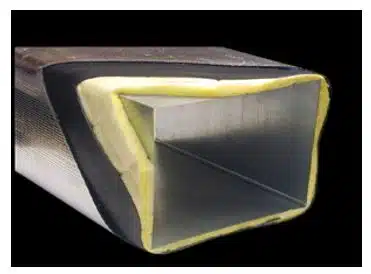

We’ve all experienced it: the persistent hum of an air conditioner, the distracting roar from a ceiling vent in a quiet office, or the unsettling sound of conversations traveling through the ductwork from an adjacent room. This background noise, generated by our essential HVAC systems, is a major source of discomfort and distraction.
Fortunately, there’s a highly effective engineering solution designed to bring peace and quiet back to our spaces: ductwork sound attenuators. While these devices come in all shapes and sizes, this guide will focus on the crucial role of the Small Duct Sound Attenuator and explore how these and other silencers are the unseen heroes of a quiet building.
To put it simply, a sound attenuator hvac is like a muffler for your building’s air conditioning system. It’s a specially designed device that is installed directly into the ductwork to significantly reduce the amount of noise that travels through it.
The noise within an HVAC system comes from two main sources, and a sound attenuator is designed to tackle both:
A sound attenuator is not just an empty box; it’s a precisely engineered acoustic device that is fundamental to creating a comfortable and private indoor environment.
The magic of duct sound attenuators lies in the principle of sound absorption. While they look like a simple section of duct on the outside, their internal construction is designed to trap and dissipate sound energy.
Here’s a breakdown of how they work:
The result? The air flows through the attenuator with minimal restriction, but the noise is significantly reduced. The key to a well-designed attenuator is balancing maximum noise reduction with minimum resistance to airflow (known as pressure drop).
While large, primary attenuators are often installed right after the main AHU fan, this doesn’t solve all noise problems. Noise can be regenerated as air travels down the duct, turning corners, and passing through dampers. Furthermore, the main issue in many rooms is crosstalk.
This is where the Small Duct Sound Attenuator becomes an essential tool for targeted noise control. These compact units are designed to be installed at specific problem areas within the duct network.
Key Applications for a Small Duct Sound Attenuator:
The same principles of sound absorption are applied to much larger and more powerful equipment, where the noise problem is significantly greater.
Industrial chillers are massive sources of powerful, low-frequency noise. A chiller attenuator is a heavy-duty, large-scale silencer engineered to handle the extremely high airflow and intense noise profile of these units. They are installed on both the air intake and discharge points of the chiller plant to prevent this overwhelming noise from disturbing the surrounding community.
Cooling towers, which are often located on rooftops, generate a huge amount of noise from their massive fans and the sound of falling water. A sound attenuator for cooling towers is a specialized, weather-resistant silencer designed to control this noise. These can be very large, sometimes taking the form of large banks of louvers or even complete acoustic enclosures, and are absolutely critical for meeting local noise regulations.
Selecting the correct duct sound attenuators is a technical process that depends on several factors:
Because of these complexities, it is always recommended to consult with an acoustic engineer or a reputable HVAC supplier. They can perform the necessary calculations to ensure you get a solution that provides the quiet you need without compromising the performance of your system.
From the compact Small Duct Sound Attenuator ensuring privacy in an office to the massive chiller attenuator keeping a neighborhood peaceful, these devices are fundamental to modern acoustic design. They work silently and out of sight, but their impact is profound. By tackling noise at its source within the ductwork, sound attenuators allow us to enjoy all the benefits of powerful HVAC systems without the disruptive and unwelcome noise that comes with them.