


Soundproof Underlays: A Key to Quieter Living and Working Spaces
In our increasingly dense and busy world, unwanted noise has become a pervasive issue. From the upstairs neighbors’ footsteps to the constant hum of traffic, intrusive sounds can disrupt concentration, invade privacy, and diminish our quality of life. While many consider soundproofing a complex and costly endeavor reserved for recording studios, a foundational and highly effective solution lies right beneath our feet. A high-quality floor acoustic underlay is the unsung hero of modern construction and renovation, serving as an essential barrier that transforms a noisy environment into a sanctuary of calm.
This specialized layer of material, installed between the structural subfloor and the finished flooring, is meticulously engineered to combat noise at its source. Whether you’re installing new floors or looking to upgrade an existing space, understanding the role of a flooring acoustical membrane or underlay is the first step toward achieving genuine acoustic comfort and restoring peace to your living and working environments.
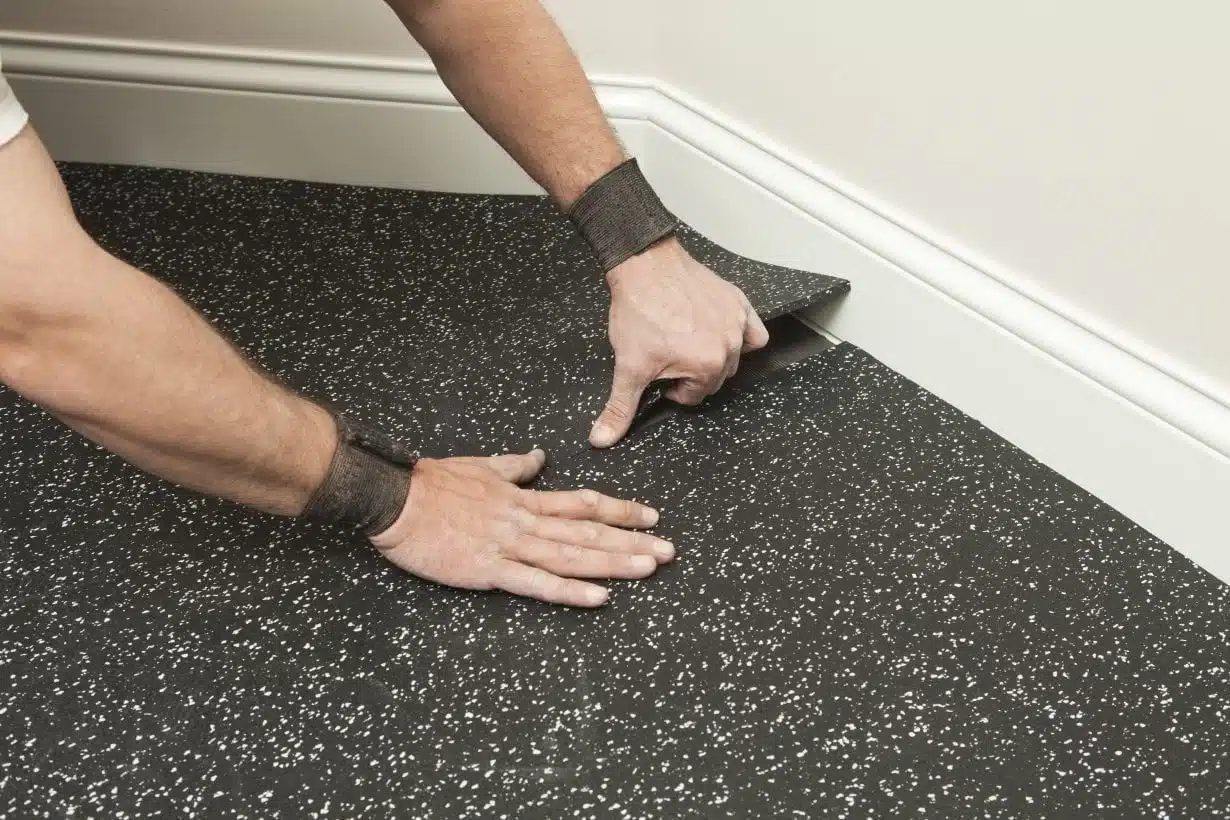
Acoustic Underlay
To appreciate how soundproof underlays work, it’s crucial to understand the two primary ways sound travels through a floor-ceiling assembly.
Impact noise, also known as structure-borne noise, is the sound generated by direct physical contact with the floor. The energy from the impact creates vibrations that travel through the solid components of the building—the flooring, subfloor, joists, and drywall—before radiating as audible sound in the room below. Common sources of impact noise include:
The effectiveness of a floor assembly in isolating these vibrations is measured by its Impact Insulation Class (IIC). This single-number rating is determined through laboratory testing, and the higher the IIC number, the better the floor’s performance at stopping impact sound. Building codes in multi-family housing often mandate a minimum IIC rating (typically 50) to ensure residents have adequate protection from their neighbors’ activities.
Airborne noise consists of sound waves that travel through the air. When these waves strike a surface like a floor, they cause it to vibrate, which in turn transmits the sound to the space on the other side. Think of a drum: hitting one side makes the other side vibrate and produce sound. Common sources of airborne noise include:
The ability of a material or building partition to block airborne sound is measured by its Sound Transmission Class (STC). Like the IIC rating, a higher STC number indicates more effective sound insulation. A dense, heavy floors acoustic membrane is particularly effective at increasing a floor’s STC rating by adding the necessary mass to resist vibration and block sound waves.

The market offers a wide array of soundproofing products. The best choice depends on the type of noise you need to block, your flooring material, and your budget.
High-Mass Membranes (Rubber & Mass Loaded Vinyl)
When the goal is to block airborne noise, mass is your greatest ally. A flooring acoustical membrane is specifically designed for this purpose. These are typically thin but very heavy sheets made from materials like recycled rubber or Mass Loaded Vinyl (MLV).
Cushioning & Absorptive Underlays
While membranes excel at adding mass, other materials are designed to absorb impact energy and cushion the floor.
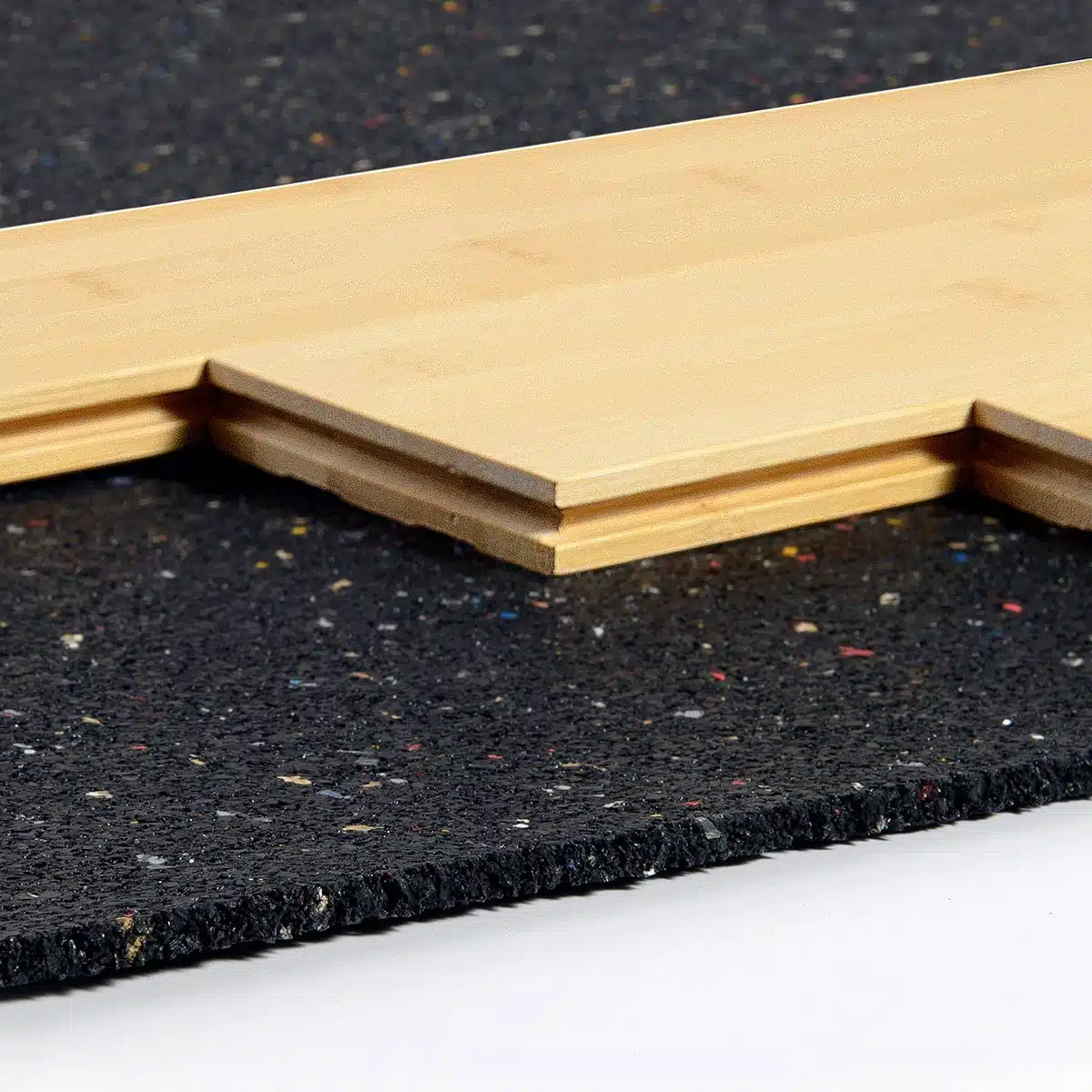
The synergy between your underlay and your finished floor is crucial for success.
Proper installation is just as important as material selection. To maximize acoustic performance, ensure that the subfloor is clean, flat, and dry. The underlayment seams should be butted together tightly and sealed with acoustic tape to create a monolithic barrier. For best results, the underlay should be run up the perimeter walls by a few inches, creating a “pan” that decouples the flooring from the wall structure and prevents sound from flanking around the edges.
By investing in the correct soundproof underlay and ensuring it is installed correctly, you are not just laying a floor; you are building a foundation for a quieter, more private, and more comfortable life.
